GROWING UP NEAPOLITAN / JOURNAL
N° 02 — FOLKLORE / SUPERSTITION
“NON È VERO, MA CI CREDO”: THE EVIL EYE IN NAPLES
You do not have to believe in superstition to grow up speaking its language.
Published 6 September 2026 · 3 MIN READ
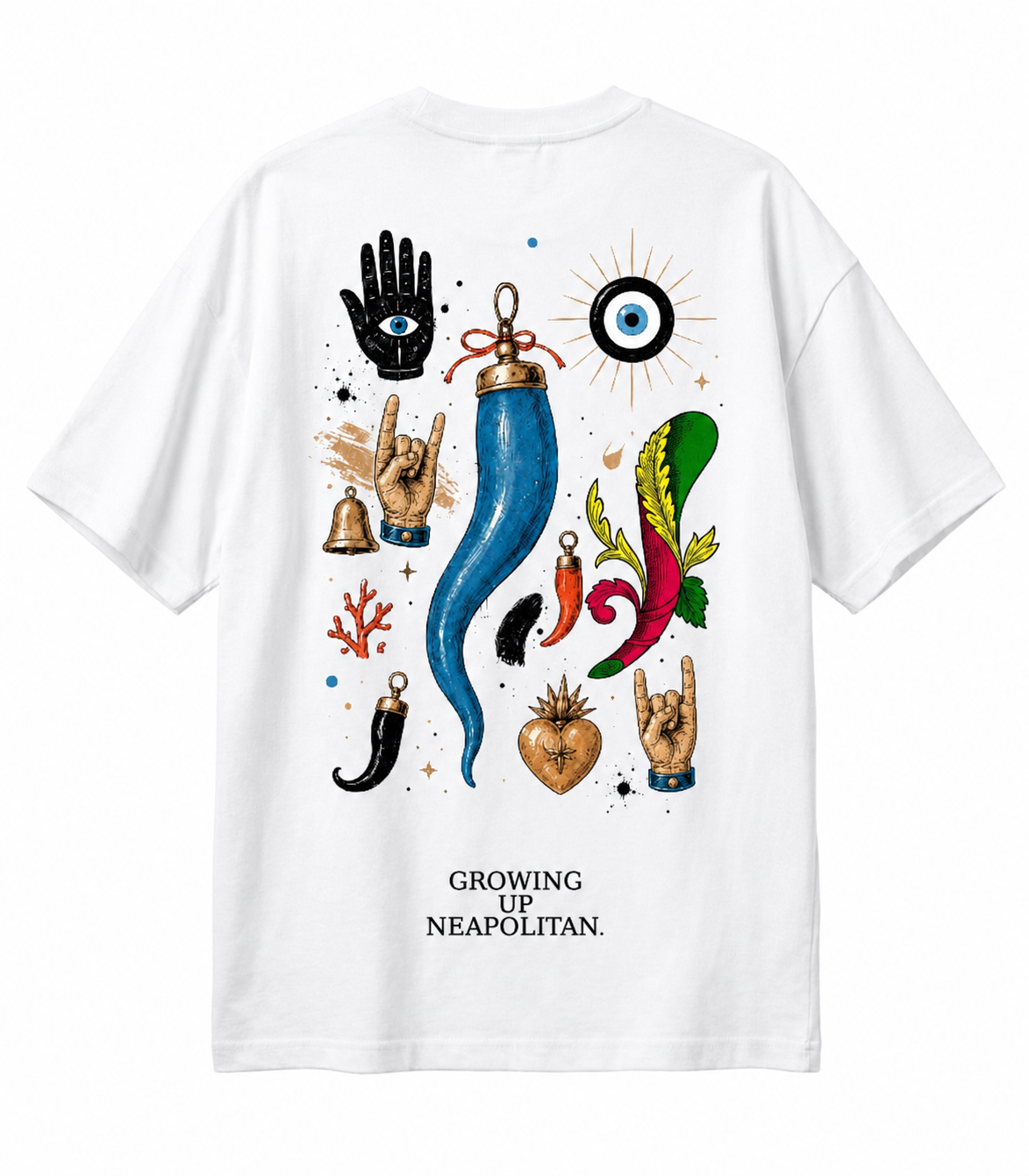
“Non è vero, ma ci credo.”
It isn't true, but I believe it.
Few sentences capture the relationship between Naples and superstition quite so well.
The contradiction is the point.
You can laugh at the ritual and still perform it.
You can say you do not believe in the evil eye and still think twice before tempting fate.
In Naples, superstition is not always a system of literal belief.
Sometimes it is simply a language you grow up speaking.
The malocchio
The idea of the evil eye exists in cultures across the world.
In Naples it developed its own particularly rich vocabulary.
The malocchio is traditionally understood as harm caused through a hostile, envious or powerful gaze.
Closely connected is the idea of the jettatore: someone believed capable of bringing misfortune.
The Soprintendenza Archeologia, Belle Arti e Paesaggio for Naples records the traditional saying:
“L'uocchie so' peggio d' 'e scuppettate.”
Eyes can be worse than gunshots.
It is a dramatic sentence, but the idea underneath it is instantly recognisable.
Be careful of envy.
Be careful who you tell your good news to.
Not every gaze is innocent.
The curniciello
If there is danger, naturally there must also be protection.
One of Naples' most recognisable protective objects is the red horn: the curniciello.
Today you see it on jewellery, keyrings and in shops across the city, but its symbolic role is older than its contemporary souvenir version.
According to the Soprintendenza of Naples, the traditional lucky horn is considered effective only if received as a gift and should be:
“tuosto, vacante, stuorto e cu' 'a ponta.”
Hard, hollow, twisted and pointed.
The object matters.
But the ritual around the object matters too.
You do not have to believe in superstition to grow up speaking its language.
Things nobody formally teaches you
Neapolitan superstition rarely arrives as a lesson.
It arrives through family.
Someone tells you not to open an umbrella indoors.
Someone warns you about leaving money or a hat on the bed.
Someone makes a protective gesture.
Someone tells you not to speak too soon about good fortune.
You learn the rules long before you ask where they came from.
That is why traditions can survive even after literal belief begins to disappear.
A person may reject the supernatural explanation and still preserve the gesture.
Because by then the gesture belongs to memory.
Superstition becomes identity
This is what makes Neapolitan folklore so interesting.
The boundary between belief, humour, habit and identity is not always clear.
A curniciello can be an amulet.
It can also be jewellery.
It can be a family gift.
It can be an inside joke.
It can be a reminder of home.
Sometimes it is all of those things at once.
That is the world behind Growing Up Neapolitan designs such as L'Uocchie Sicche and Beat a Te.
The point is not to tell people that superstition is true.
The point is to recognise something that is true:
generations of Neapolitans grew up surrounded by its language.
And even when we laugh about it, some of us still prefer not to take the risk.
Non è vero.
Ma ci credo.
SOURCES & REFERENCES
CONTINUE READING
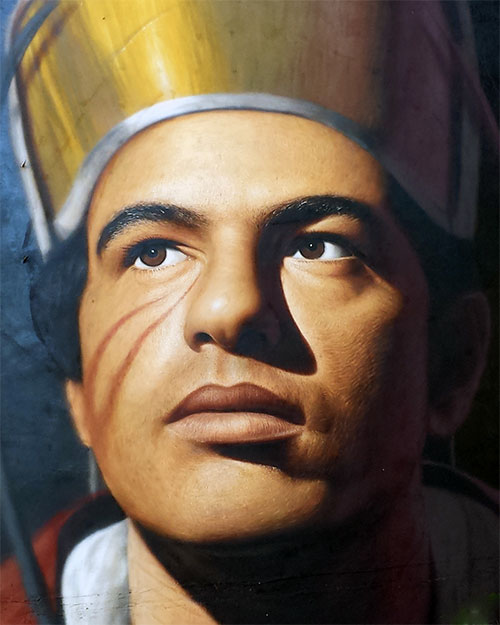
N° 03 — FAITH / FOLKLORE
SAN GENNARO: THE SAINT NAPLES TALKS TO LIKE FAMILY
In Naples, devotion is rarely distant. The relationship with San Gennaro is intimate, emotional and deeply woven into city life.
3 MIN READ
READ ARTICLE
N° 05 — NAPLES TODAY / IDENTITY
NAPLES ISN'T FROZEN IN TIME
The Naples people inherit is never exactly the Naples their parents knew. Identity survives because it moves.
4 MIN READ
READ ARTICLE